
The fourth part in the series on last month’s trip to Italy.
Here is an interesting factoid. On last year’s trip around the north, villas were the most common type of abandoned building we saw. Hands down this year, it was churches in the south. One might be able to draw some conclusions about the cultural and economic differences between the two halves of this country. That the north has a much higher standard of living is well documented, and though al of Italy is very Catholic, it seems the south is more pious. I’ll leave further musings to the reader, while I move on to why we’re all here: the photos themselves.
Perhaps unsurprisingly with the numbers on their side, the best photographs I took on this trip were among those of churches. I had quite a few that made the cut, enough that I will finish this series with a two parter on Italian houses of worship. The first shot below is from the first place we hit within a couple hours of landing in Rome. It is was taken from the altar facing the front door.
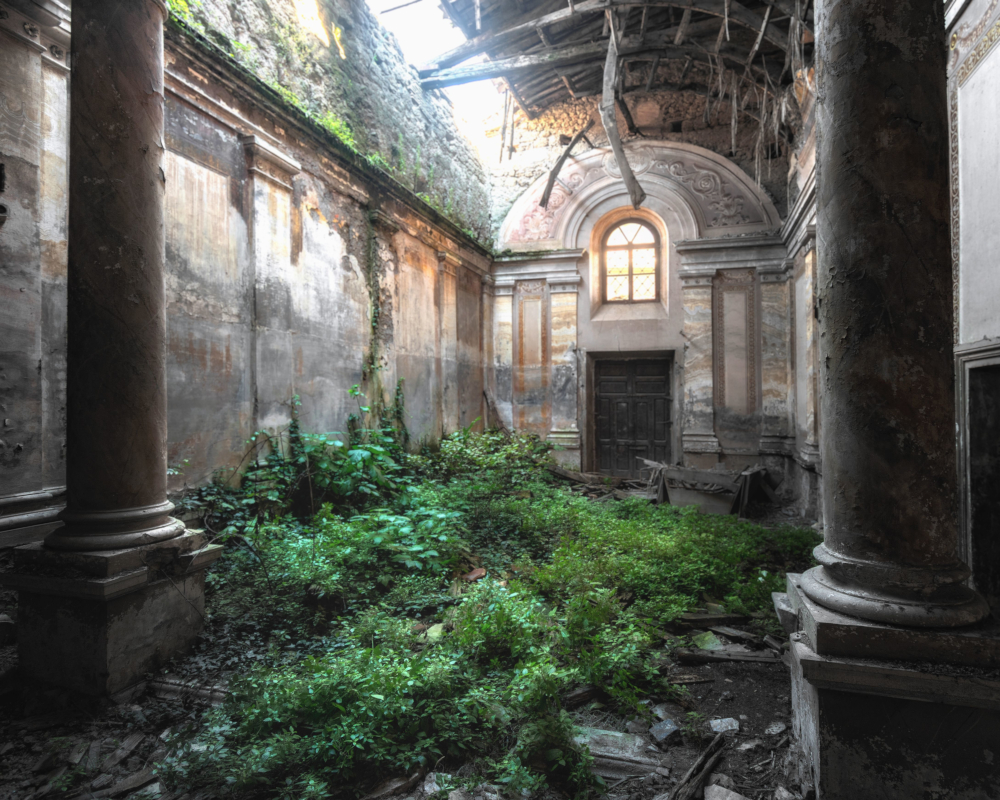
.
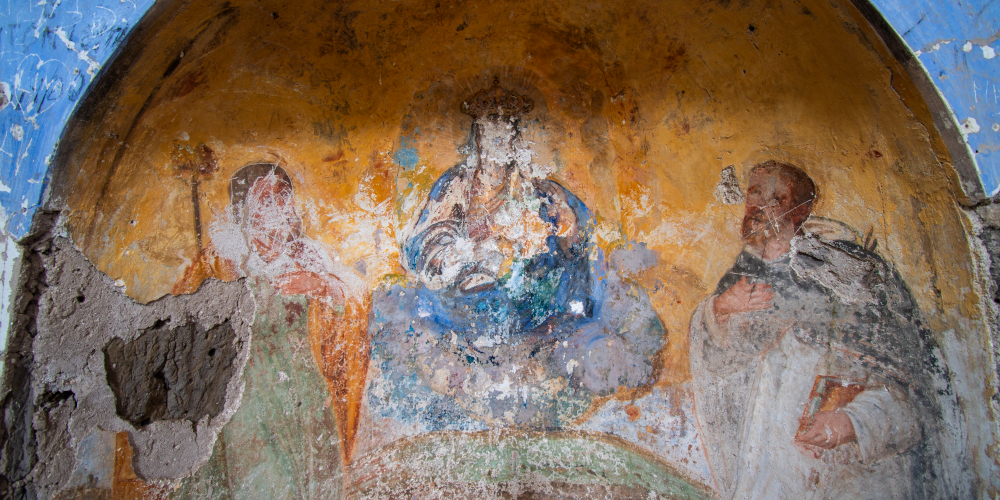
This next one was a bit unusual because it had a fresco on this hemispherical niche directly behind the altar. This seemed to be something very much for the priests, as I don’t believe the congregation would have had a great view of it during mass, as the first photo shows.

.
Below: a close up.
.
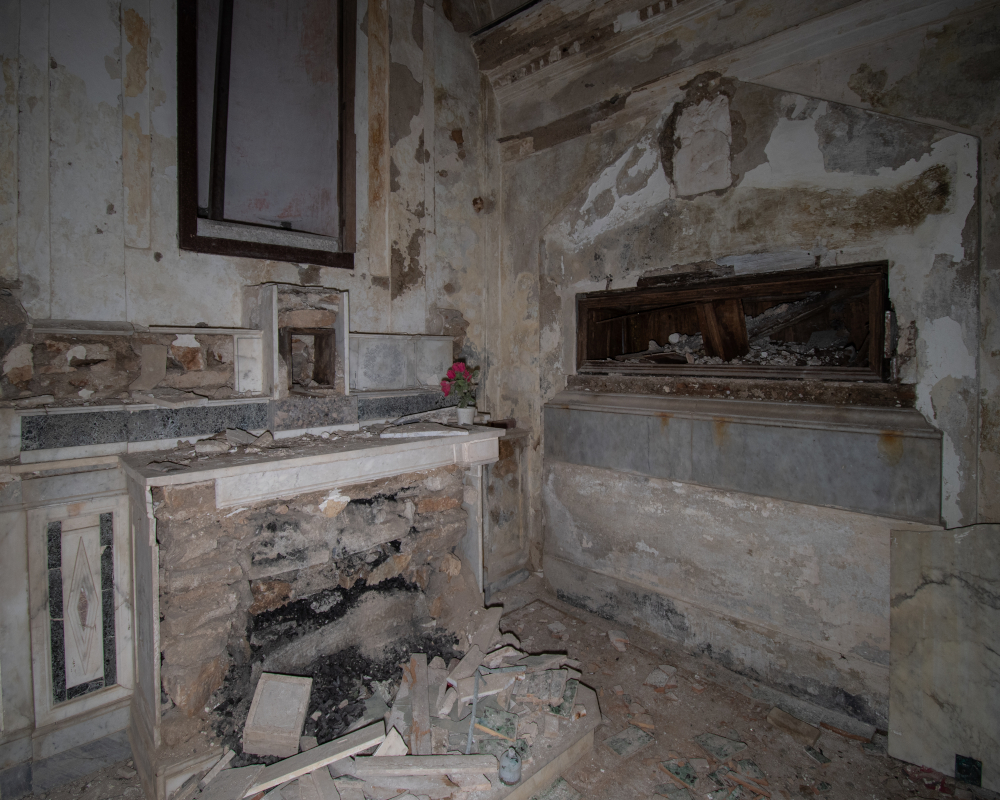
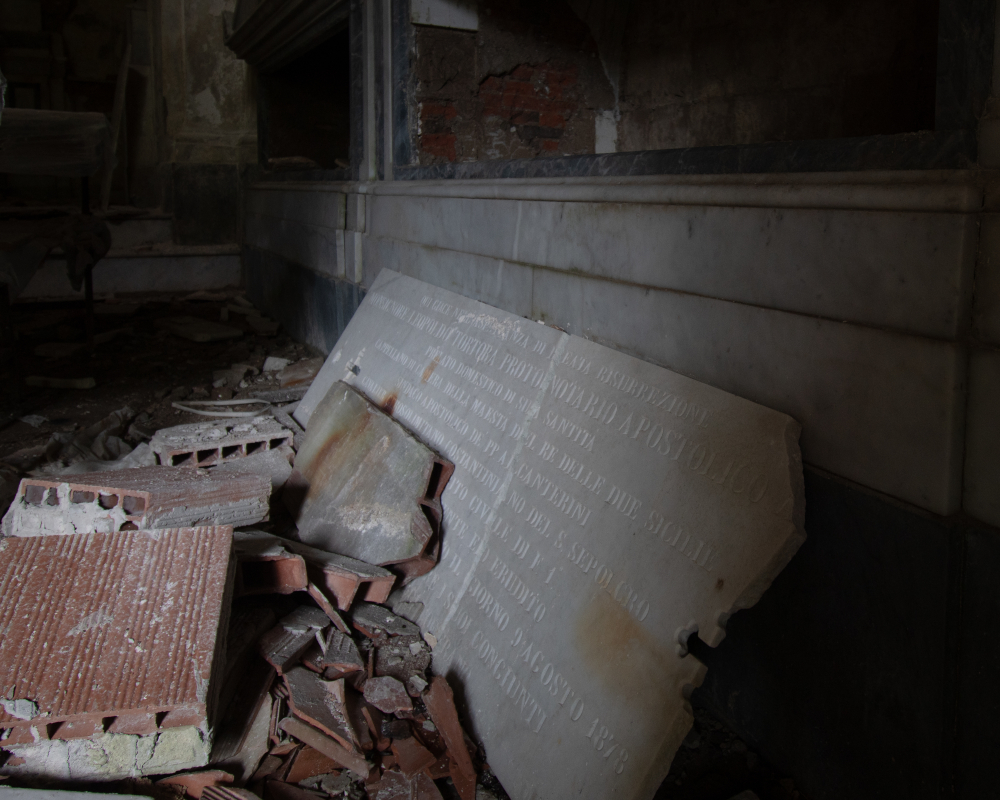
This next church we arrived at late on a cloudy afternoon. The already weak light quickly dimmed as the afternoon turned to dusk, leaving us to rely heavily on our own lights in the gloomy interior. It only accentuated the mood in place, as this was the church from which, if the story we heard was true, all the bodies interred in its many crypts were stolen. I had a moment of thinking to myself that this is exactly the kind of place most people would find unnerving to visit.
.
.
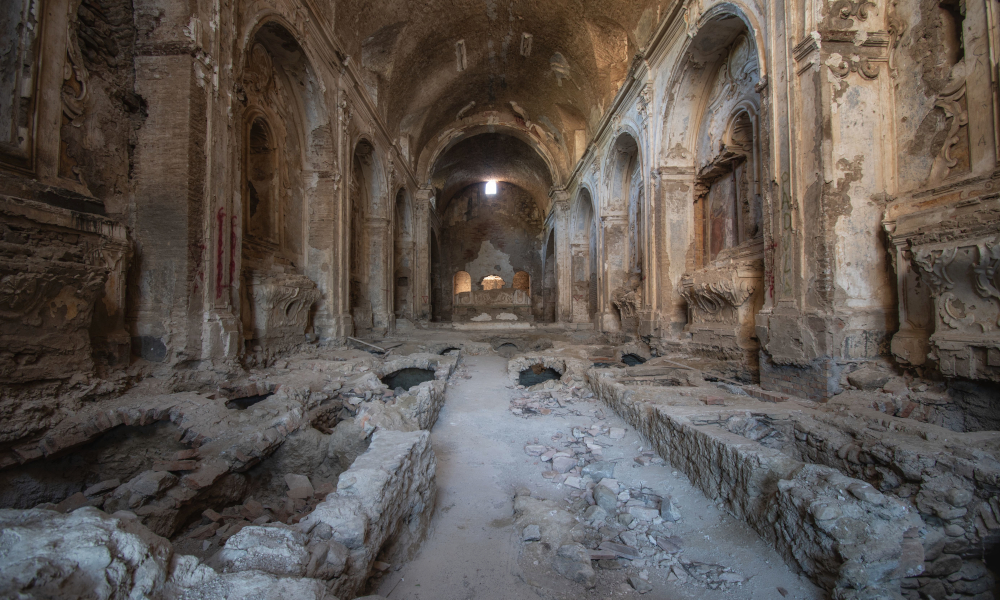
Some churches like this one were so unusually located that I wondered if their primary purpose was, in fact, as places to celebrate mass. This one, for example, was built close to the edge of a gorge that separated it from the nearest village which could be seen on the other side. It was a short but rough distance from the nearest road, and its floor was covered in crypts, the bodies once within since disinterred. The church had undergone some interesting renovations: crumbling walls revealed older frescoes had been covered by a foot of masonry. It was all a bit strange, especially taken together.
.

.
Below: the bricked-over artwork.

.
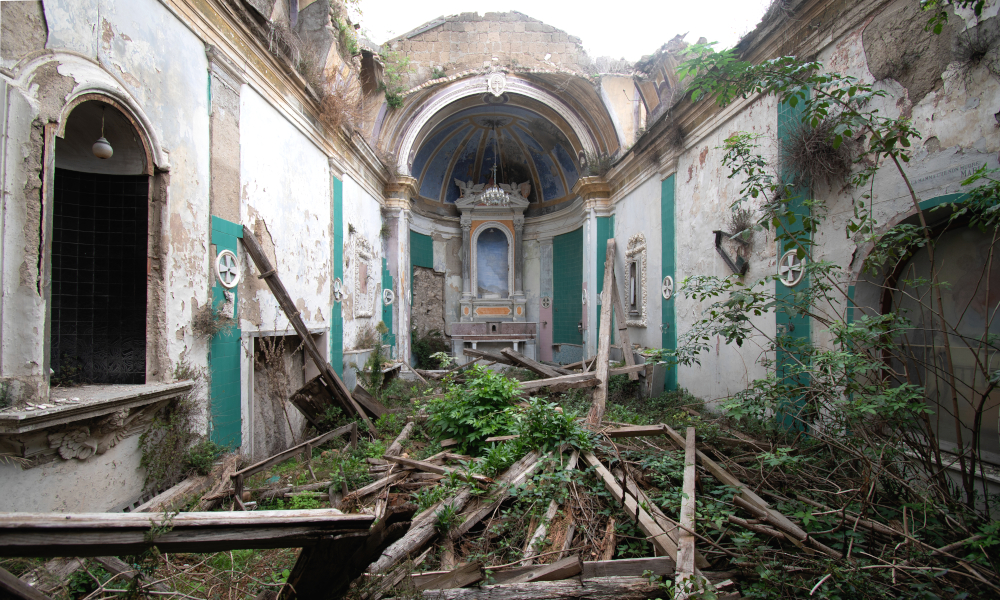
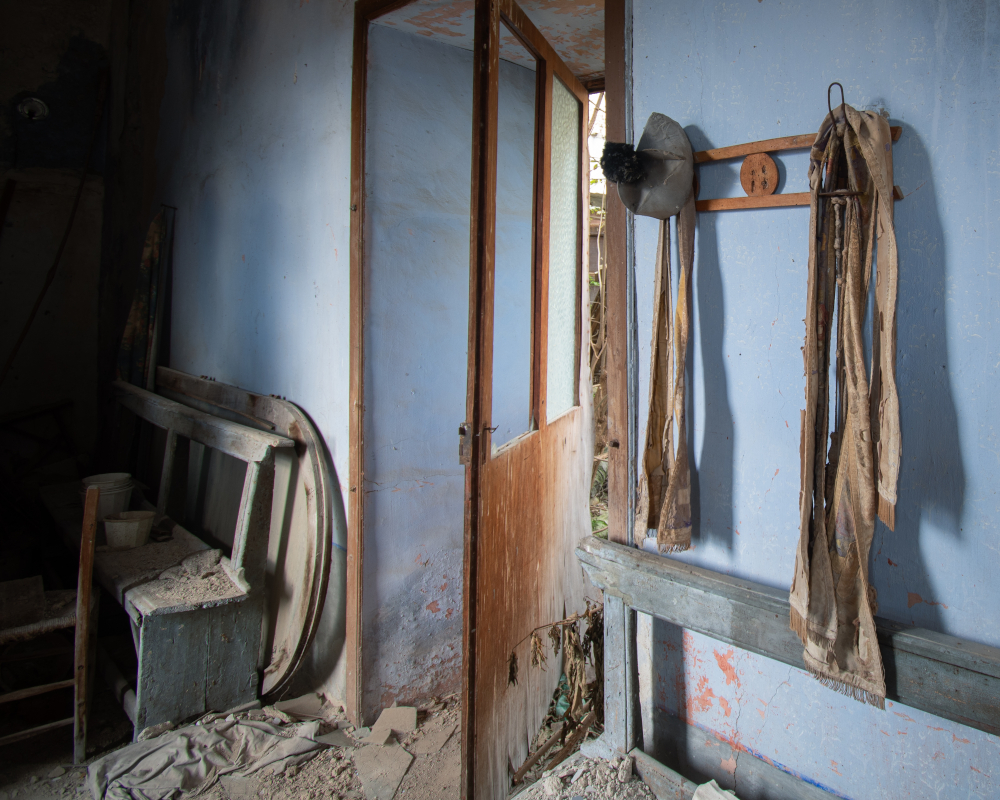
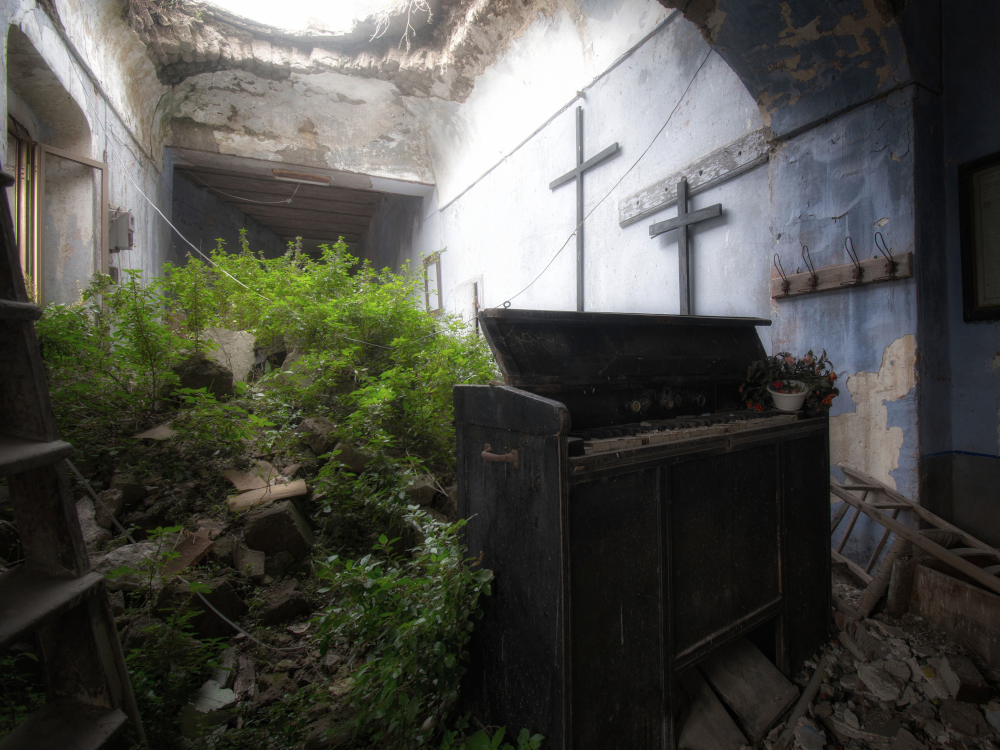
I’ll finish this post with the place that was one of our best finds. This church, whose entire roof was missing as if it had been taken off by a giant can opener, still had a mostly intact chandelier hanging over the altar, and a vestry which still had many of the accoutrements of mass, despite having a giant hole in the ceiling itself. It was a tiny church at the top of a very cramped neighborhood, and I think that the fact you had to walk under the watchful gaze of a couple nonnas on the way in and out of here probably dissuaded more theft- or vandalism-motivated visitors and preserved it more than one might expect.
.

.
.
.
There is always a piano.
One final post on the churches of Italy coming soon!
 T A B U L A R A S A photography