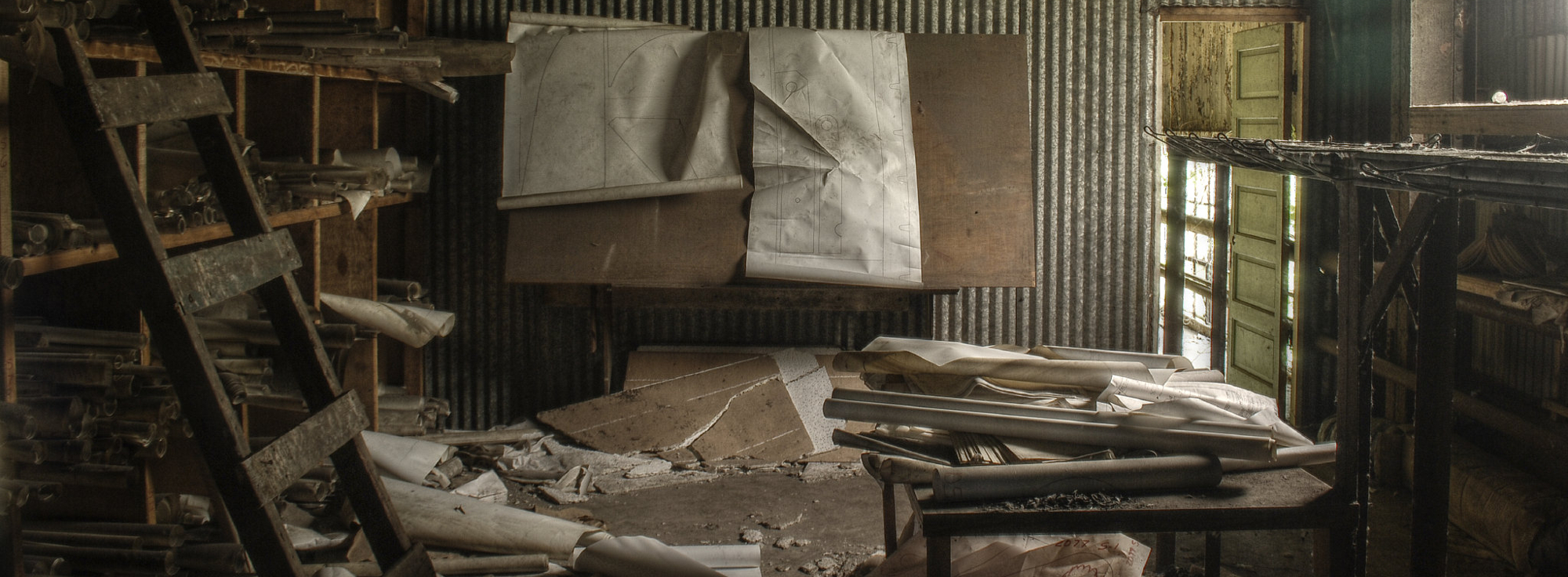
(part of the Utah series)
A pause now before the next post returns us to another one of Utah’s stunning national parks. Though those were the main focus of this trip, we will always make time for some old human relics. As much as I loved the desert landscapes, it was places like these that really rounded out the experience.
If you’ve read this blog before, this will be nothing new. Photography to me is very much an outlet for my goth sensibilities, and regardless what is the “main course” on any given excursion, I’ll always be open to shooting bandos. While editing my photos, what struck me was the broad range of things we found that could be placed into the relic category. So I present a trip through time of sorts, roughly moving from most recent to ancient.
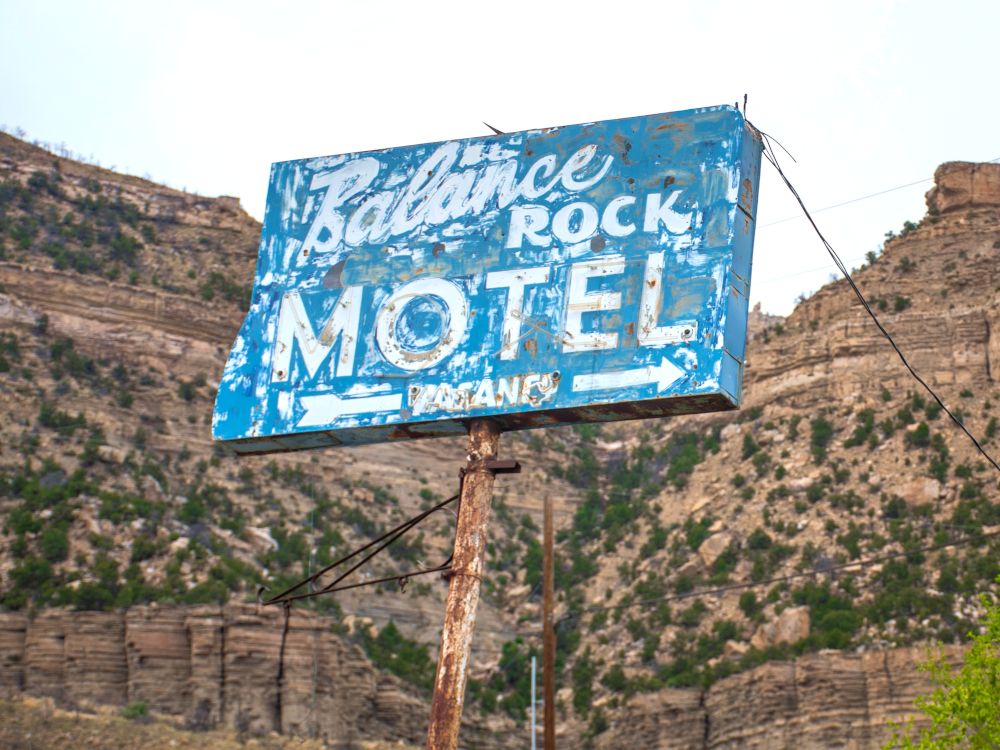
We’ll start with an abandoned motel. Perhaps “abandoned” is too strong a word, as though it was out of use and decaying, it is on an active property and very much fenced off. Its old sign along the highway had a plaintive appeal, though.
.
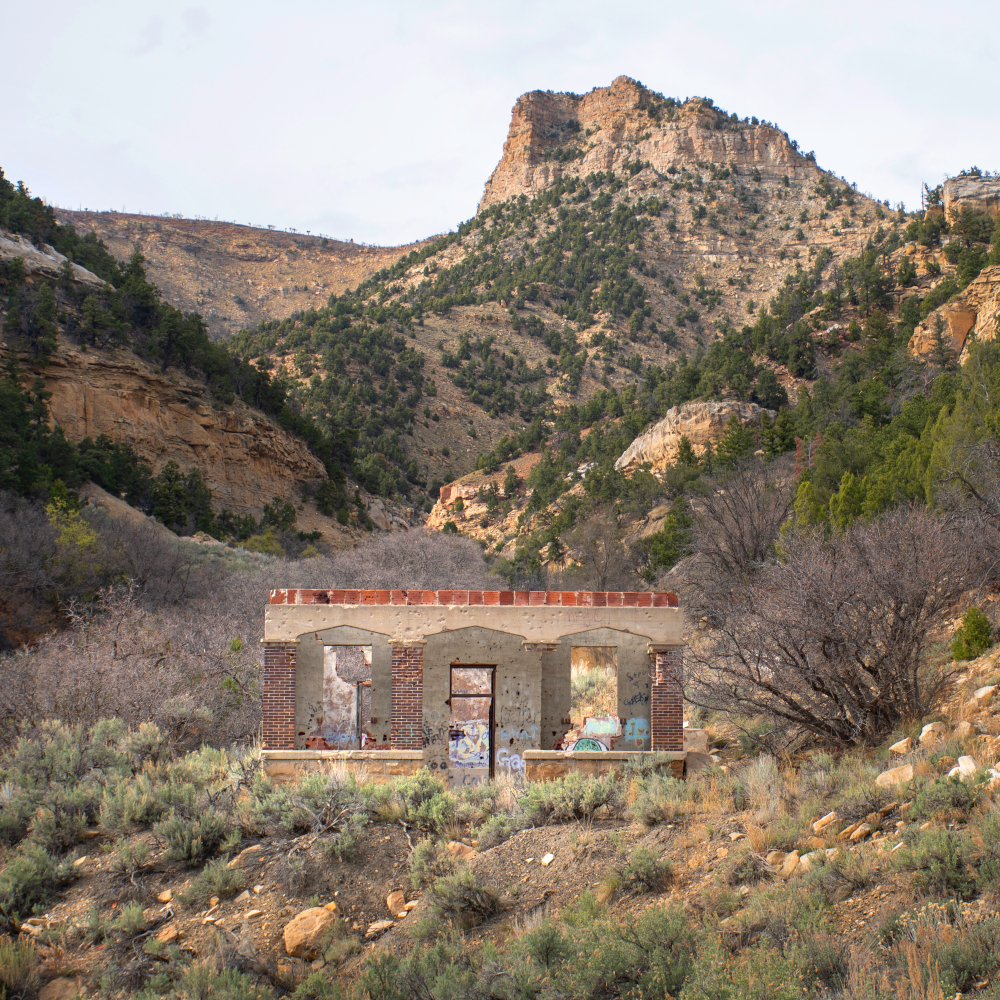
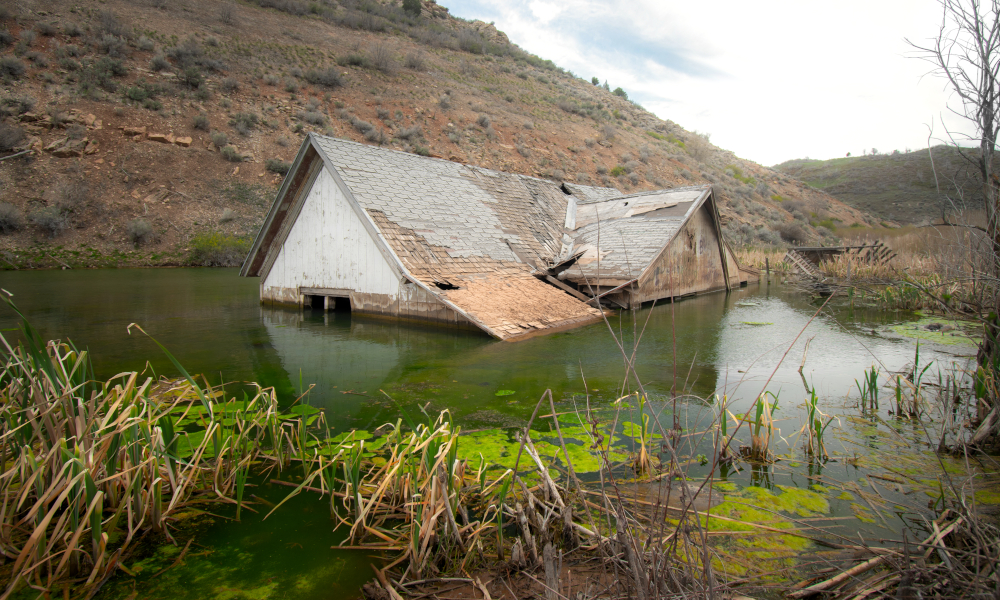
No real urban exploration happened on this trip, but we did find a couple abandoned buildings. They weren’t anything great in themselves, and what charm they had largely derived from their surroundings, be they grand desert vistas, or something more aquatic.
.
.
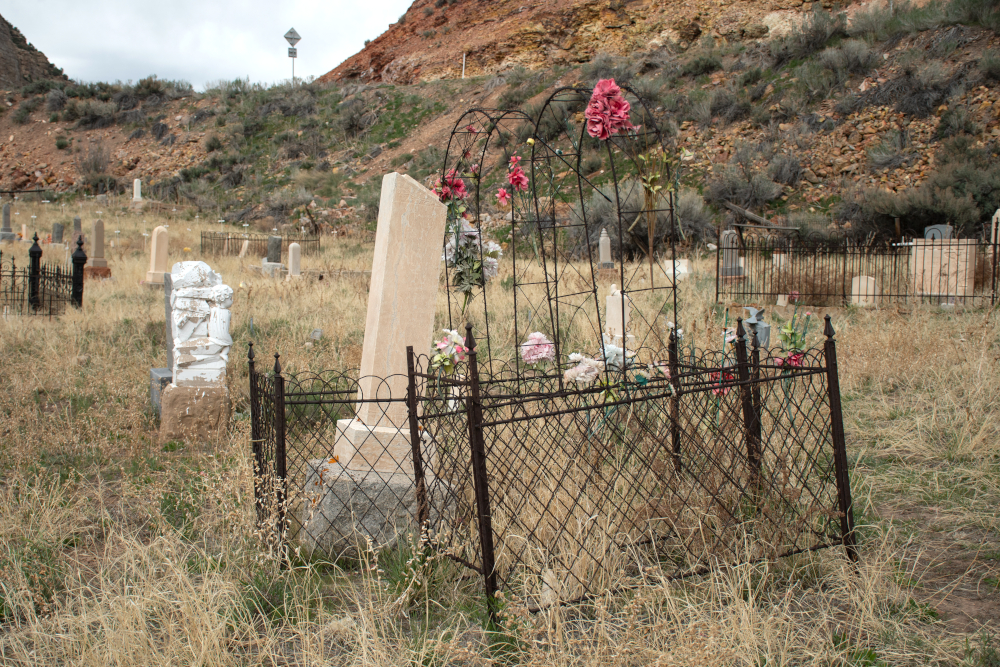
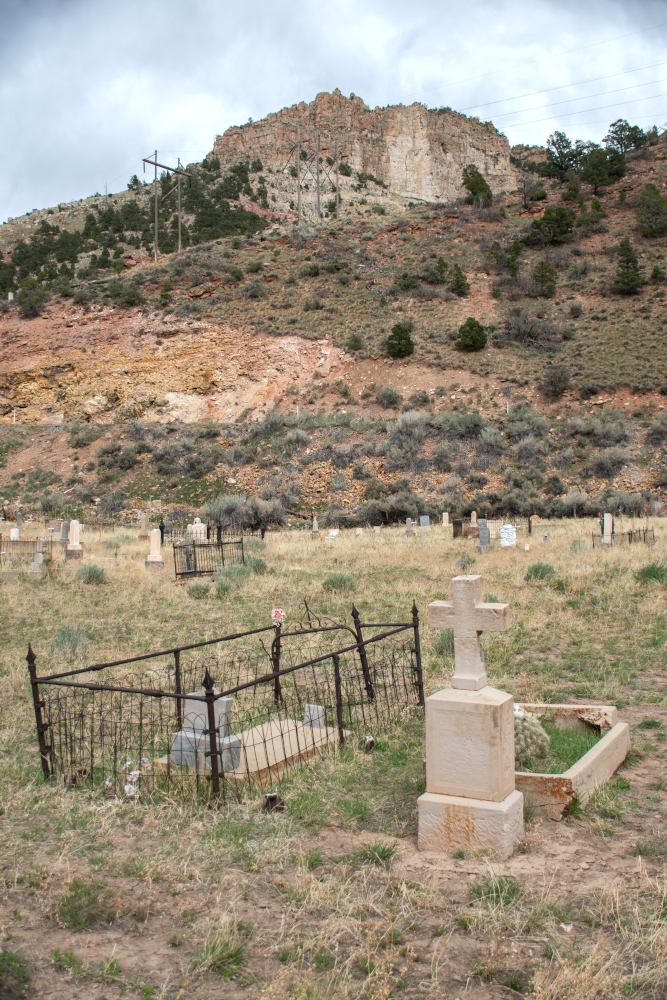
Castle Rock Cemetery, our next stop, sneaked up on me. This was my fault entirely, as I was too eager to start shooting and did not stop to read the little notice board outside the gates. The tragedy of the place would make itself known to me by another, more visual, way.

.
.
.
As old cemeteries go, it had its charm, laying in a narrow valley framed by mountains on either side and a country road meandering past. Some more recent burials have taken place here, and many gravesites were obviously still cared for, but by and large most tombstones dated from the early twentieth century. And then, I came to the grave below. Its immediate appeal is, of course, all the tokens left on top of it. But as I looked at the date marker, I thought that I had just seen the same date on another nearby grave. And then, as I looked up, my eyes refocused on the little sea of the white markers in the background, I realized that they each listed the same date: March 8th, 1924. We were in the ghost town of Castle Rock, Utah, where one of the worst mining disasters in American history had taken place just over a century ago. Ultimately, this date would appear on one hundred and seventy one of the graves here.

.
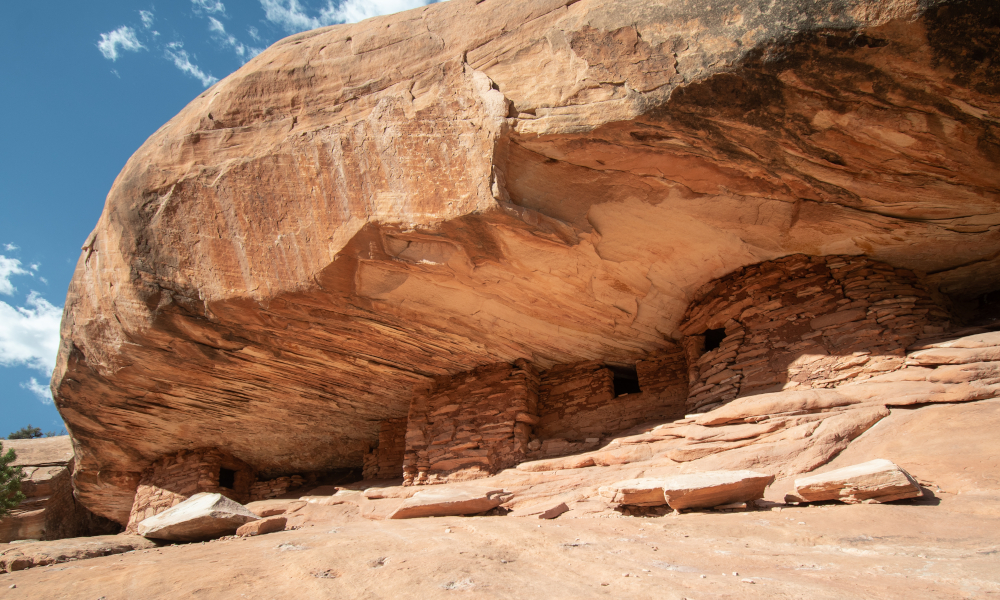
From 1924 we reach further back in time, to pre-Columbian artifacts of the Pueblo peoples. Among other things, they were known for storing their crops in high, hard to reach places. It seemed cliff side granaries provided security from both pests and floods, but it’s wild to me that they might have needed to climb a mountain to get some corn for the evening meal. We visited a couple of these sites, this being the best shot I got of one.
.
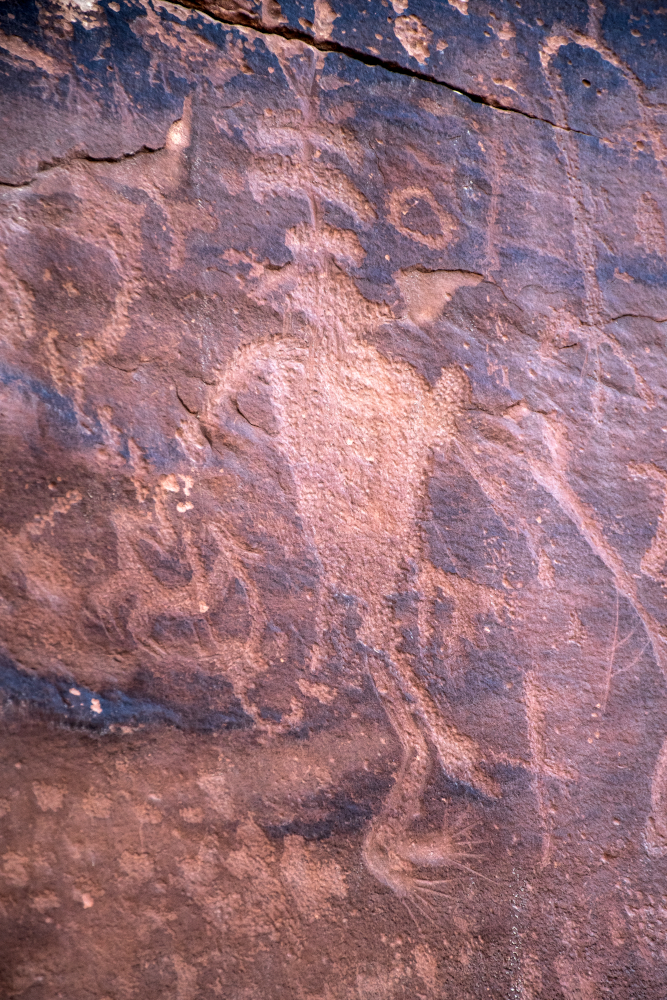
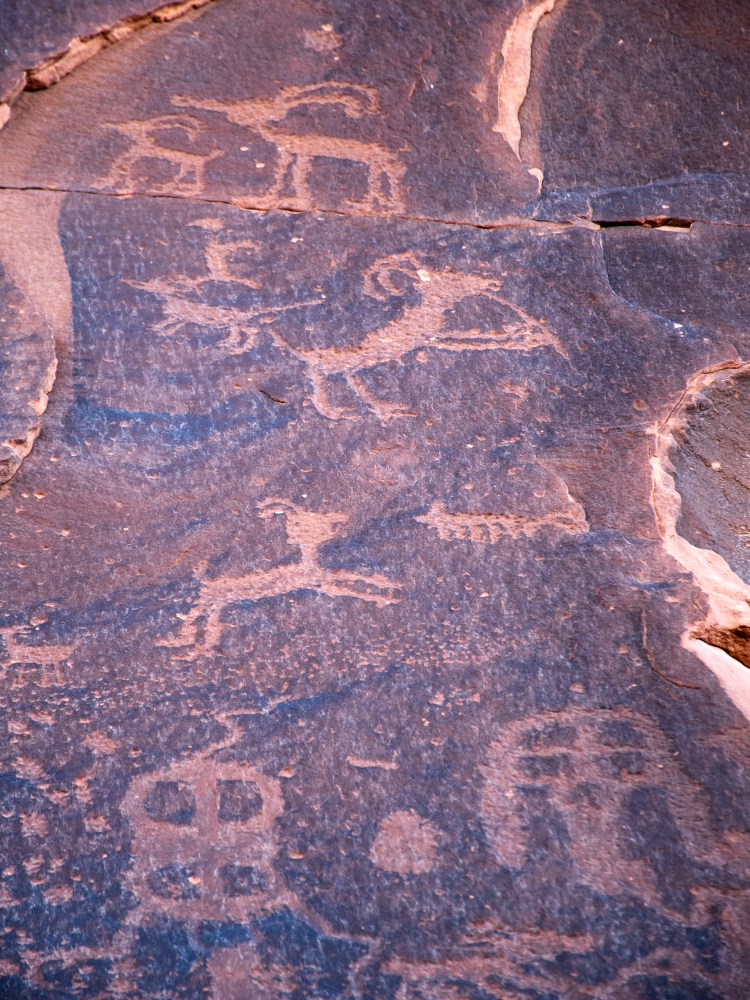
But the Puebloans left behind far more fascinating glimpses into their lives with their petroglyphs. There are many sites across the area where these rock etchings can be found, and we visited several. I suppose I expected them to be more organized, laid out across the rock face in a systematic way, or perhaps arranged as a continuous narrative. But in fact, what they bring to mind the most are bathroom stall doodles. I don’t mean this pejoratively, it’s just that the petroglyphs seem to have been etched by different individuals at different times, and crowd the reachable space on their mountainsides. And it is what gives them a certain intimacy, seeing the art of so many hands left to us from centuries past.
.
In this last shot, the horned figure playing a flute is the famous Kokopelli, a fertility god who has become an icon of the American Southwest. In this latter-day role, he appears on myriad souvenirs in the finest truck stops. Every hacky sack enthusiast is required to own a t-shirt with his likeness on it.
.
Thank you for stopping by. There is more on Utah coming soon!
 T A B U L A R A S A photography