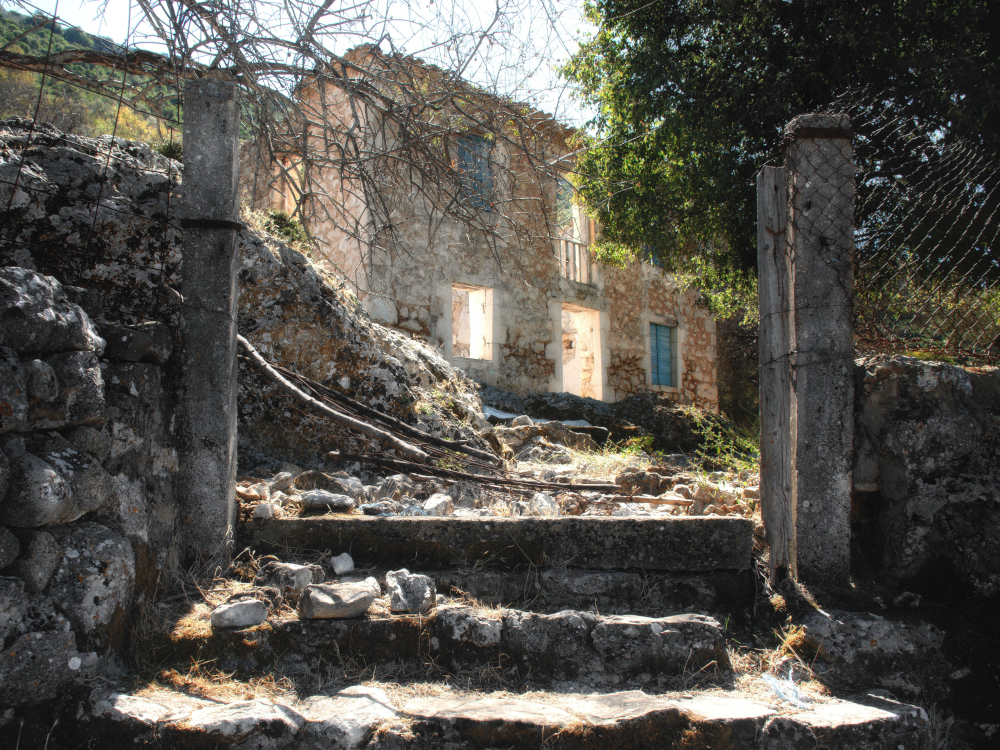
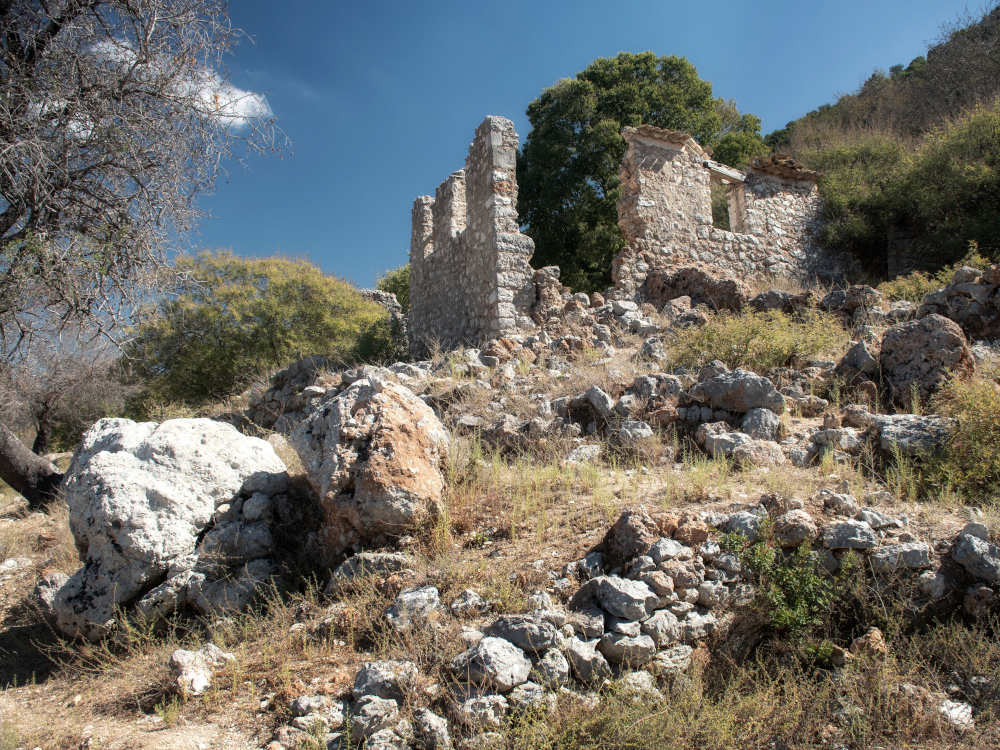
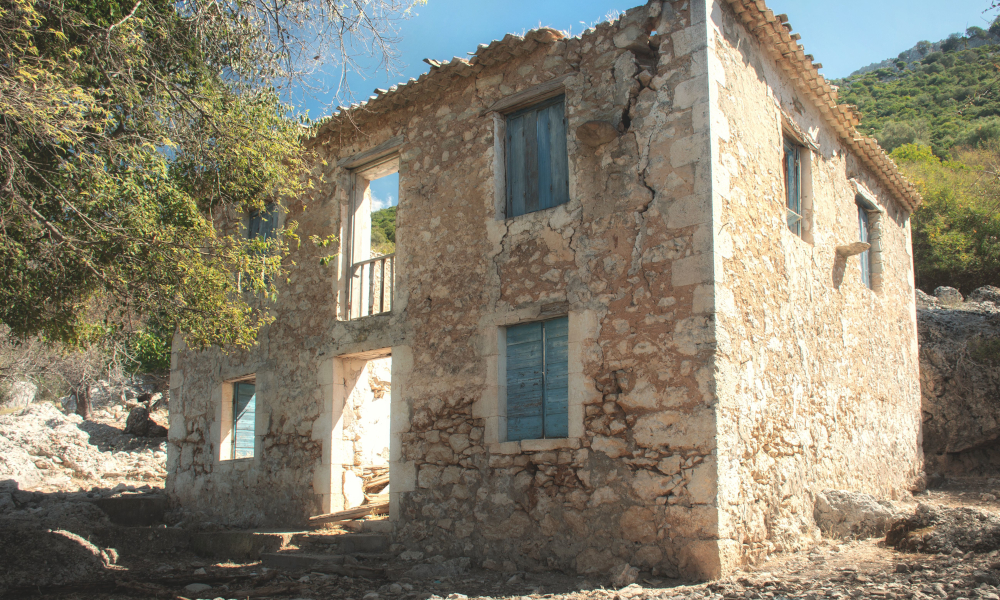
Several villages across Greece share the name ‘Plagia’, so it would be good to note that the subject of today’s post is now often referred to as Palia Plagia, or Old Plagia. It lies on a ridge, high enough that one gets good views of the seaside town of Lefkada a couple miles west. From what I could read, it was a humble farming village until 1966, when an earthquake caused residents to relocate. In a pattern I’ve seen repeated in a few places in both Greece and Italy, the moved a short way away (presumably to less earthquake-prone site) and built a new town with the same name. Hence, Plagia lies close to the Ionian coast, while Old Plagia remains where it stood, among the olive groves on the hillside.
.
.
.
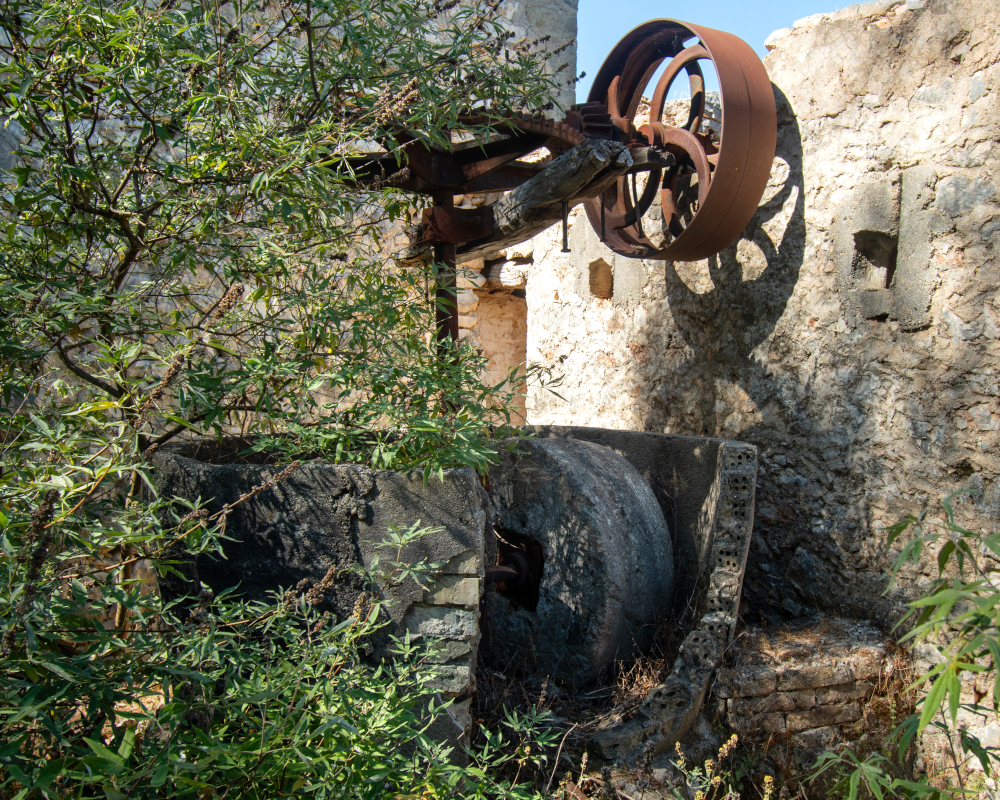
Though Plagia’s abandonment was more recent than some other places we visited in Greece, it had few artifacts left behind. Likely the residents carried everything they could away to their new town. One exception was what I believe to have been an old olive oil press.
.
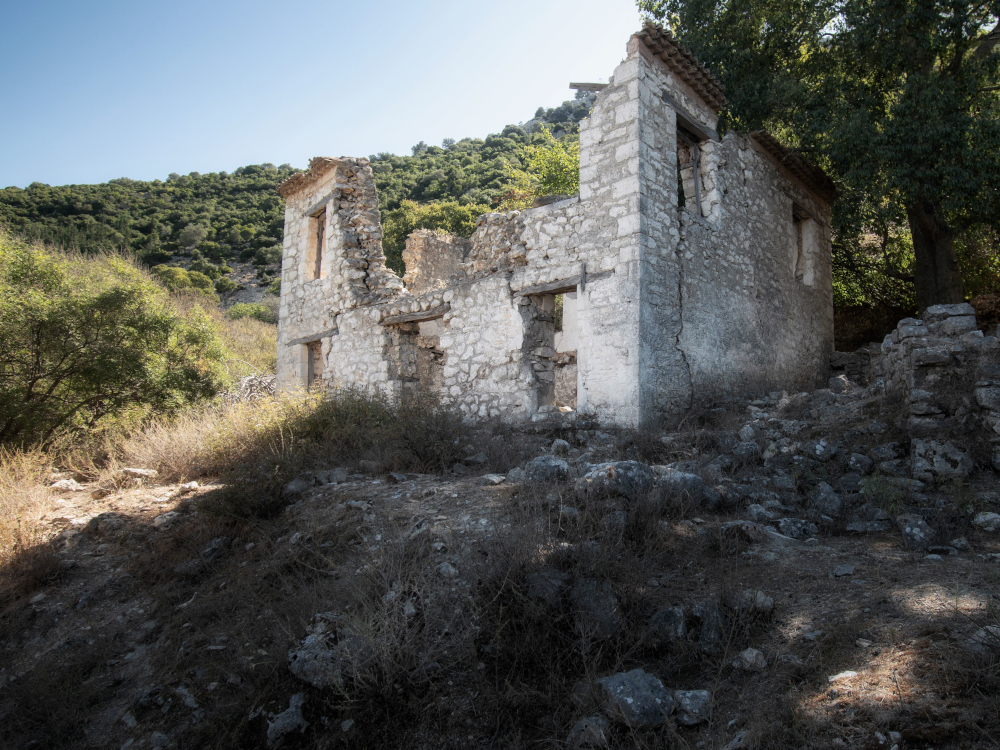
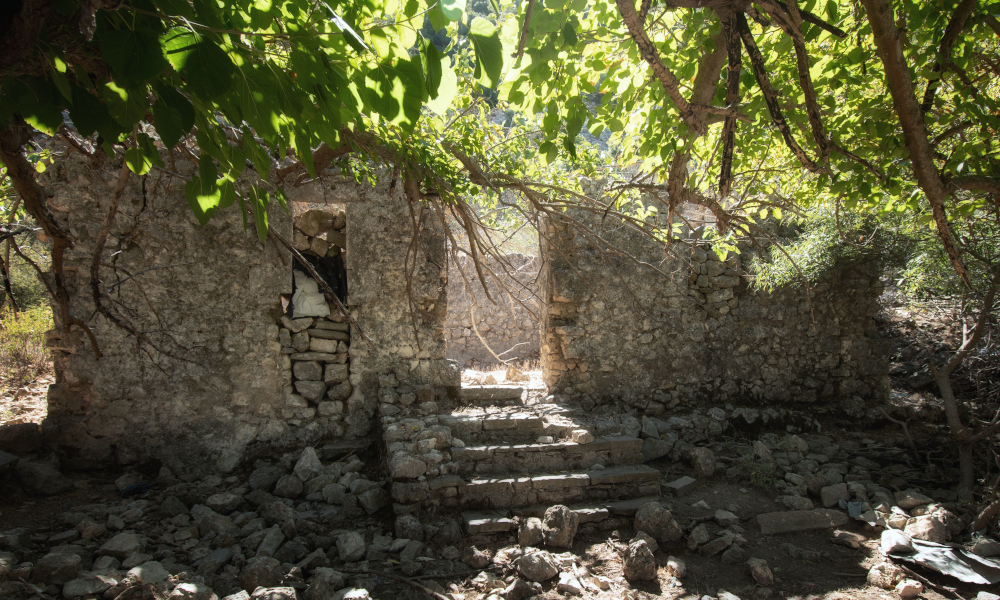
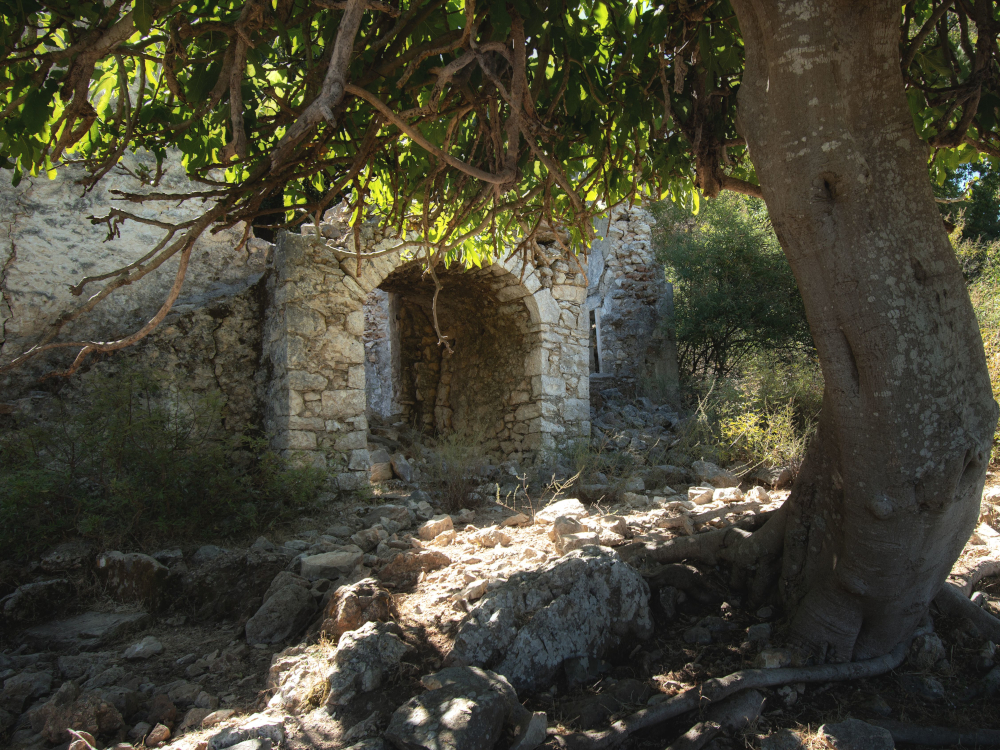
Otherwise, the charms of Plagia were in discovering its various building as they came looming out of the vegetation.
.
.
.
In a couple cases, the arched porticos in the front of a few building framed the morning sun coming through just right, creating a these mysterious, light filled tunnels.

.
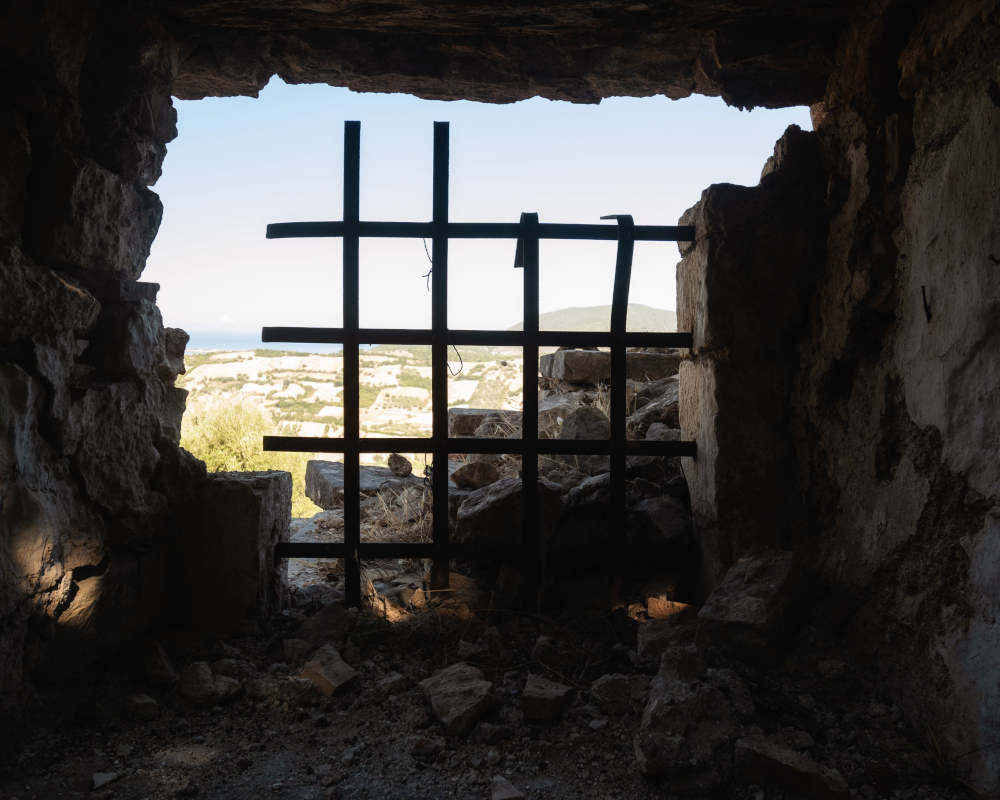
FInally, a view out of some machine room towards the aforementioned Mediterranean Sea.
.
Thanks for taking the time to read through. There is yet more Greece to come.
 T A B U L A R A S A photography