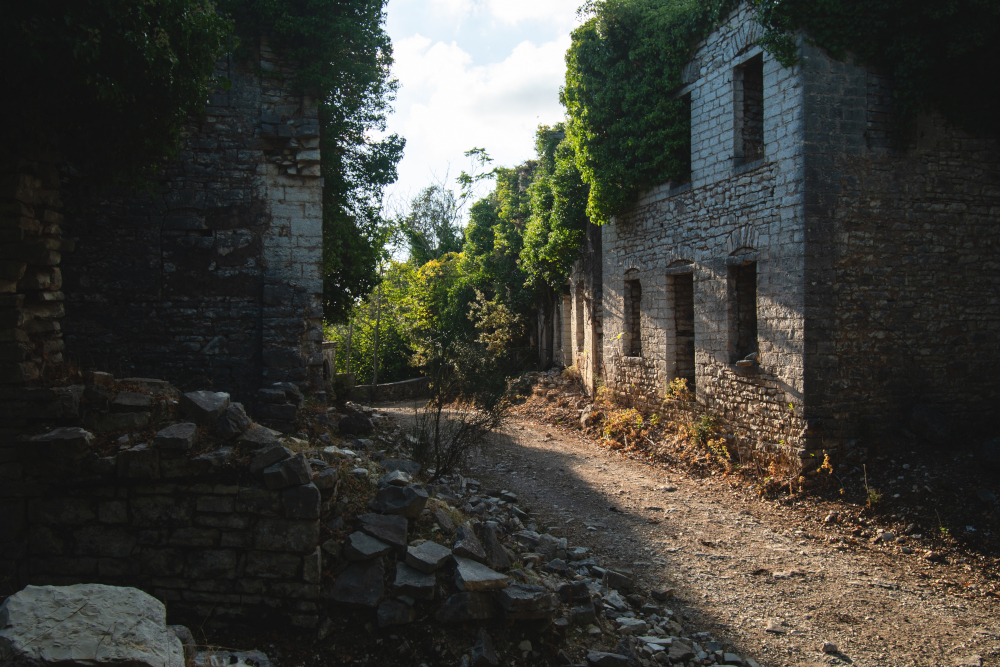
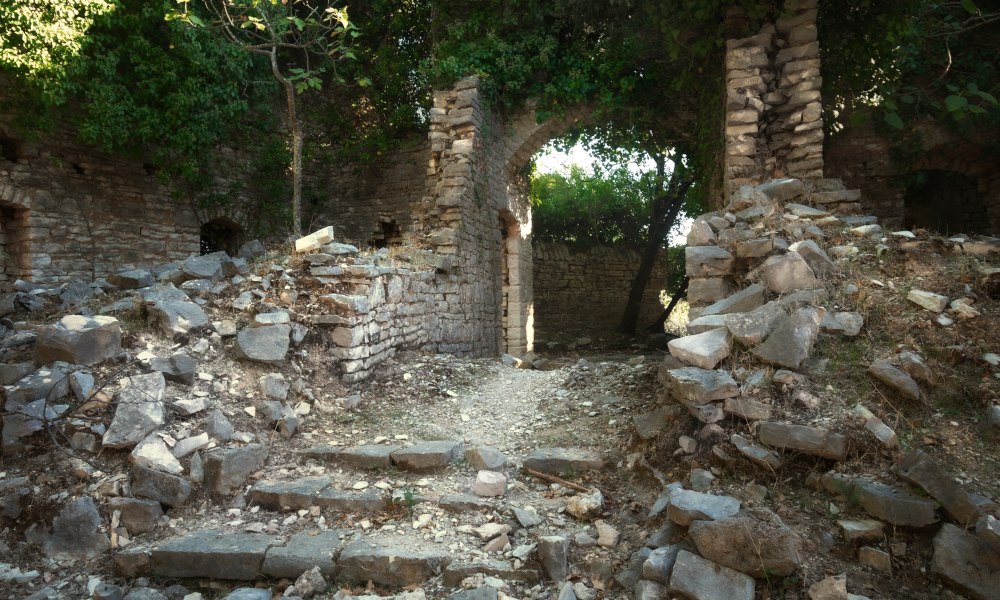
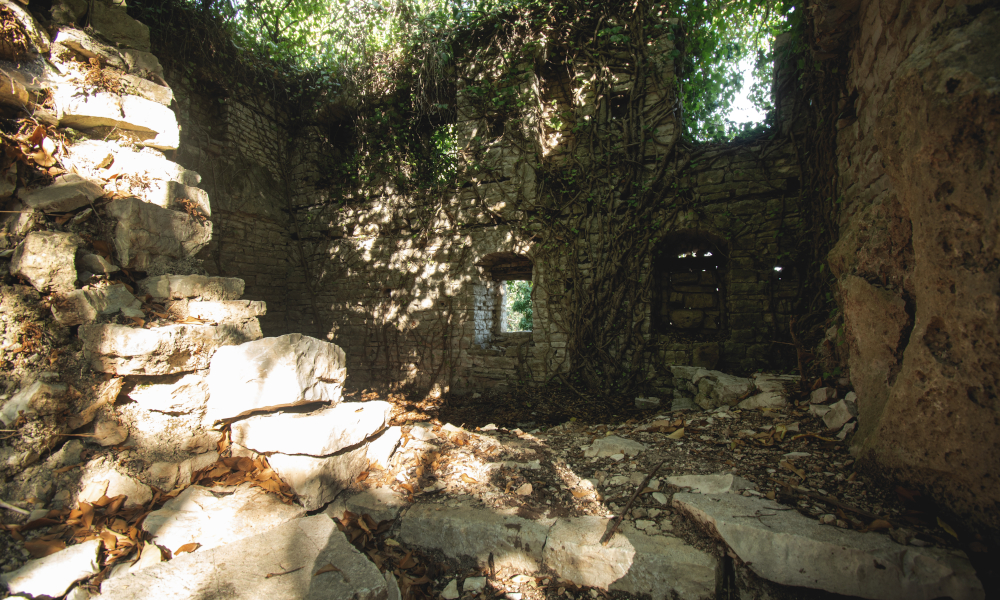
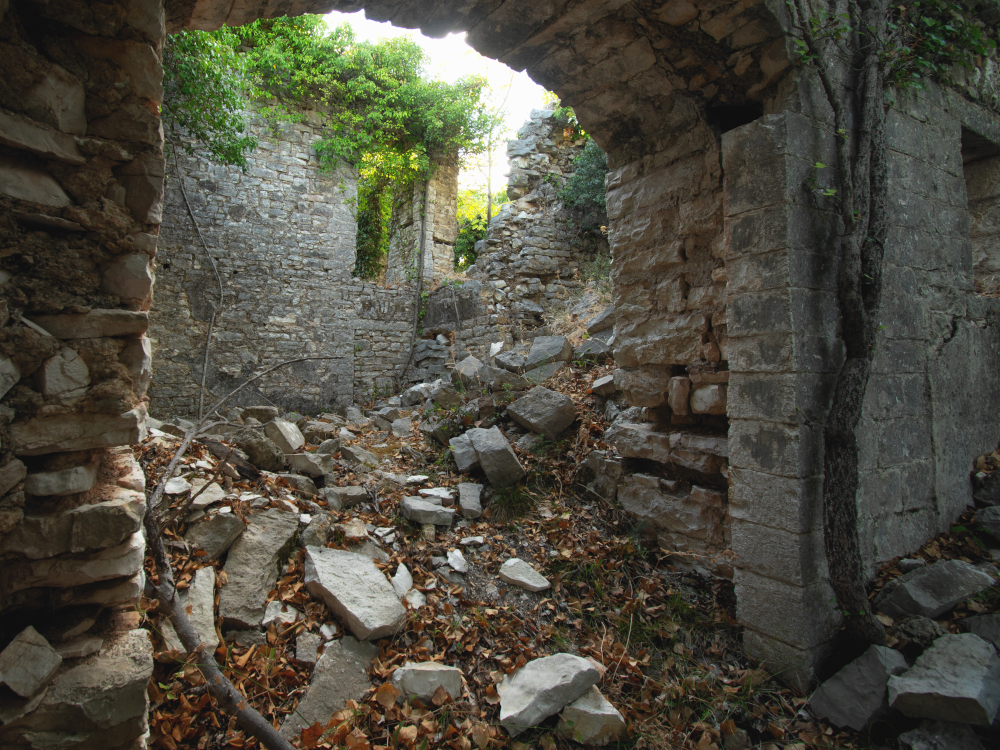
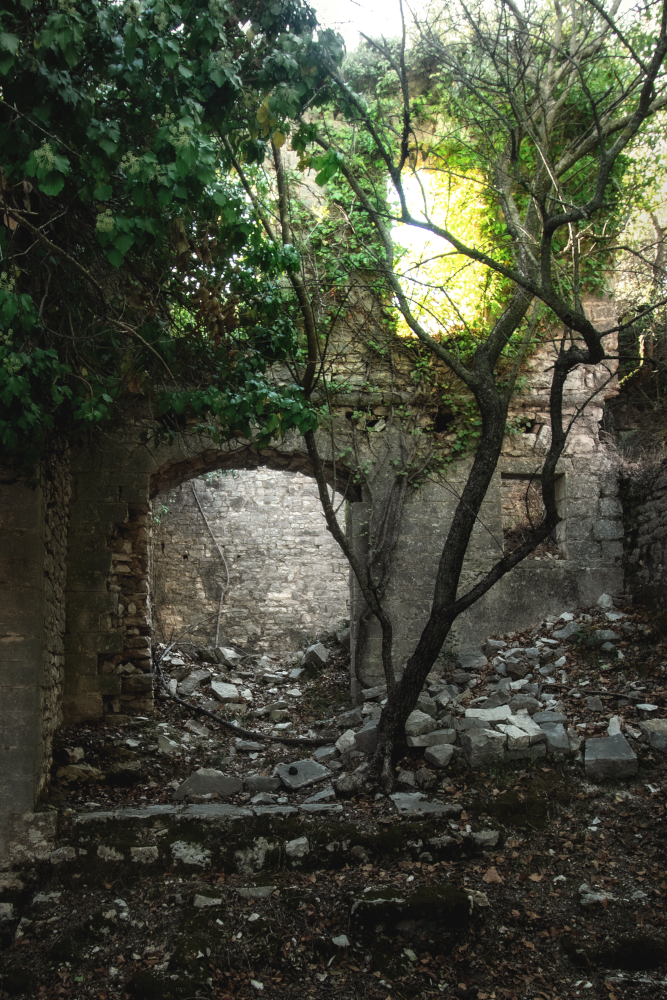
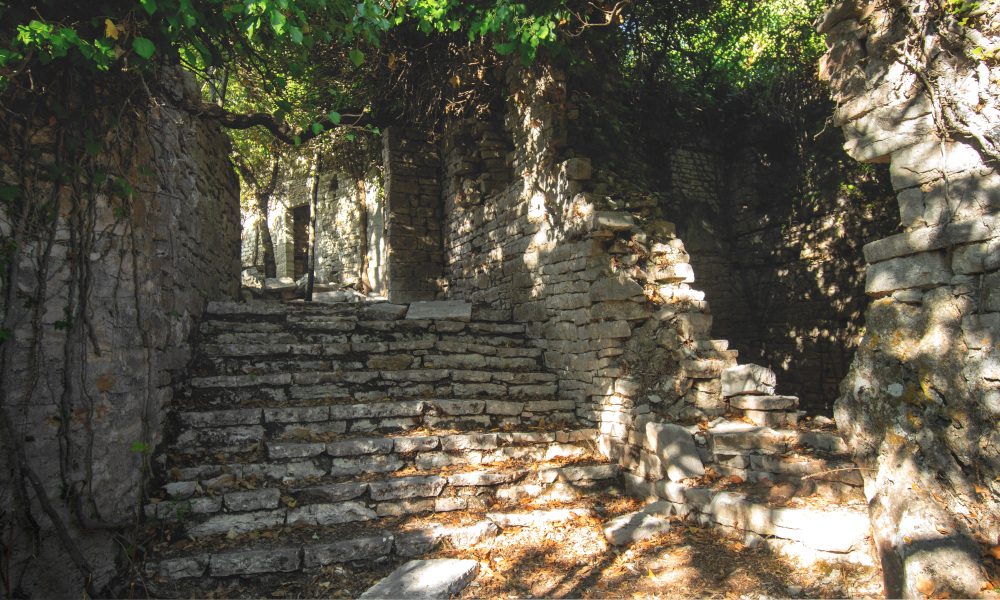
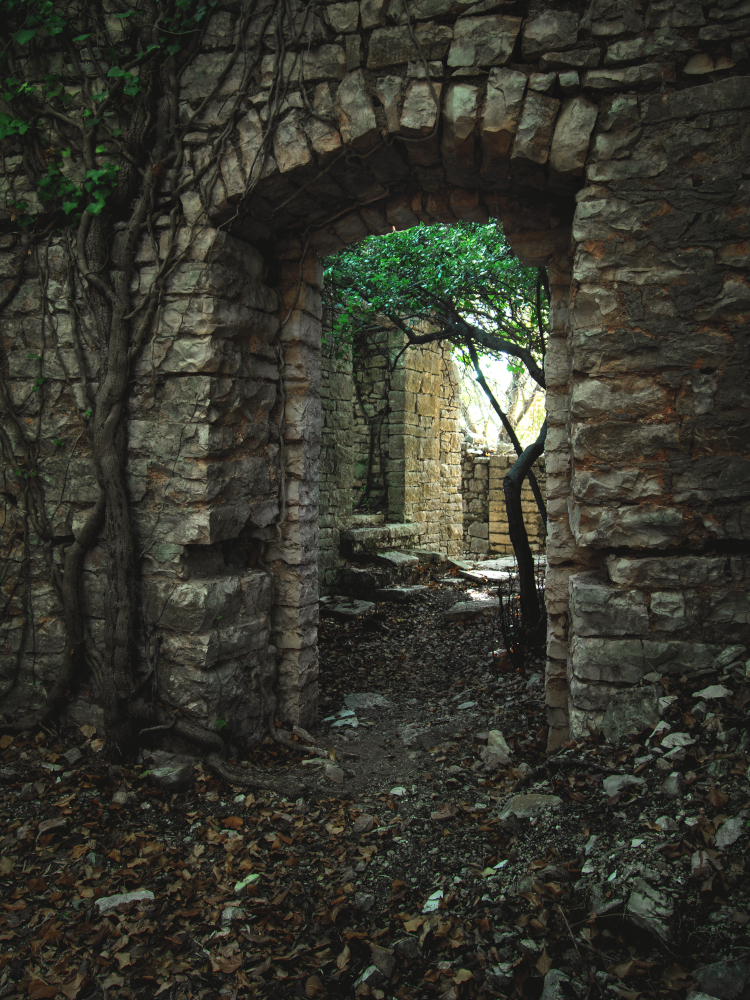
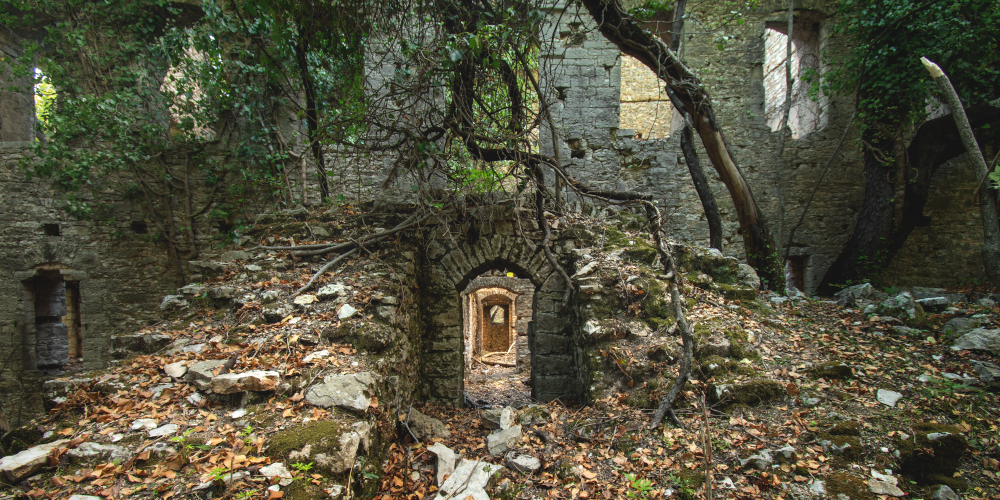
In the far north of Greece, the old town of Sagiada sits a stone’s throw from the Albanian border on a densely forested hillside. These areas of the country depart quite a bit from from what you might picture when you think of Greece. While the southern parts of Greece are more arid, with scrubby foliage and rocky hillsides (see this earlier post on Vathia for example), it seems to get wetter and more lush the further up the Balkan peninsula you go. Thus Sagiada, with its crumbling buildings being overgrown by massive vines, feels less Hellenic but rather strangely Mayan, like something you could stumble upon in the forests of Mexico.
The experience here would be intense. On trips like these there is always some jetlag and fatigue to deal with, but this day would be our most trying of that week. We were on a tight schedule, as we had a ferry we needed to catch in the evening. But our destination would prove difficult to find, and we lost time as we lost our way a couple times trying to find it. Once we did locate the rough little road that snaked its way to Sagiada, my niece had gotten carsick, and by the time we finally arrived decided she would stay in the car and nap it off. Solo now, I grabbed my gear and took off, anxious to see as much as I could in the limited time I had left. I practically ran from spot to spot, and looking back I feel lucky I didn’t twist an ankle or worse on the rough terrain. So perhaps it was the accumulated stress of the day up to that point that made Sagiada’s last surprise that much more affecting.
In all my planning for this trip, I mainly focused on the itinerary. I needed to figure out what we could see in a week and then roughly plan out the route and reserve hotels. I didn’t look into why these towns were abandoned, figuring it was the usual mix of earthquakes or socioeconomic changes that were to blame, and I could do a bit of research once back home if necessary. And most often, that indeed was the case. But running around Sagiada, I finally came across a small shrine that stopped me cold. I didn’t need to read Greek to understand what I found: the long list of names under the date of August 23rd in 1943 told me that I had spent the last hour running all over the site of a wartime massacre. I later would read that this town was chosen by the Germans for destruction in reprisal for local guerilla resistance, and the survivors forcibly resettled elsewhere. But in that moment, I suddenly felt very ashamed.
There are people who think that photographers like myself, who do urban exploration and visit the abandoned or run down parts of our world, as no better than ghouls. I have written about this before and won’t go into the debate at length here, but suffice it to say I believe that these people do have a point, but the difference between ghoulish exploitation and honest artistic or documentary endeavor in large part comes down to intent, mindfulness, and respect on the part of the photographer. Now, I might not have been doing anything physically disrespectful in my time in Sagiada, but I’m aware that I’m a man who has the privilege of being able to travel around the world for his photography and that that day I had been wound up in all my various little stresses while ignorant that I had spent the last couple hours walking on a mass grave. It was sobering.
As a photographer, I obviously can’t go back in time and undo a war crime, any more than I can change the the economic factors that led to many building that I’ve shot becoming abandoned. But I likely will always find places like these compelling, haunting, and beautiful. That day in Sagiada was a reminder that an urbex photographer should respect the very real tragedies that often create the conditions for them to walk in and take their little photos, even if it is many years later.
.
.
.
.
.
.
.
.
Thanks for taking the time to read. I have one last post on the trip to Greece coming soon!
 T A B U L A R A S A photography