Mexico City sits largely on the former site of a lake that once covered most of the Valley of Mexico. Tenochtitlan, the capital of the Aztec empire, sat on an island in the middle of this lake until it was conquered by the Spaniards, who then set about draining the lake. The Aztec capital became the central barrio of Cuauhtemoc, and the city grew around it. Fun fact: the entire city is slowly sinking, as the massive weight of such a massive megalopolis is too much for the old soft lake bed to support.
Xochimilco in pre-colonial times was an independent settlement on the southern shore of this lake, and it has retained its own identity down to this day. It is best known for an astonishing system of canals that are the remnants of the disappeared lake, a system of pre-Columbian land management that can be only be seen today in this barrio. Calling them canals is a bit misleading, however. It is the waterways that are the remains of the once open lake, while the lands between them are actually artificial islands called chinampas. These were built up in a way that allowed for optimal drainage and agriculture. Today, some of these islands are still home to small scale crops or animal husbandry, but what Xochimilco is best known for and what draws flocks of visitors are the barges that ferry them around. Called trajineras, they were, and continue to be, the primary form of transport on the canals. For tourists, they are colorfully painted party barges that offer food, drink, and Mariachi music while being steered by a single oarsman.
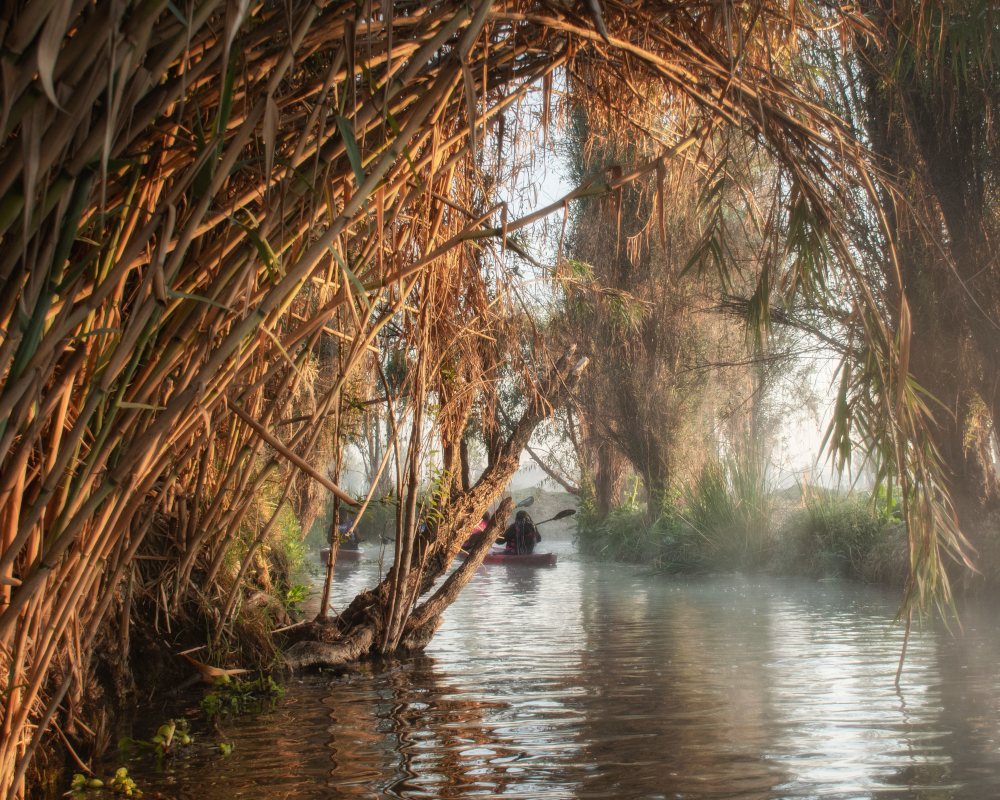
This proved to be a stumbling block for a single gringo traveler like myself: the trajineros are usually rented out for a couple of hours by a group of twelve to twenty people. And as a single gringo traveler, I did not relish the idea of either talking my way into someone else’s party, or, worse yet, hiring one out solo. Luckily, I found a small outfit that did kayak tours of the canals, and it wound up being a great choice. Rather than the party aspect, it was a predawn excursion that focused on the ecology and history of Xochimilco, along with a very special chinampa that will be the focus of its own upcoming post. So here’s a few shots that show this unique part of the world, as the predawn mists slowly gave way to the rising sun. Keep in mind that all of this is well within the borders of a city of city of almost 10 million people.
.
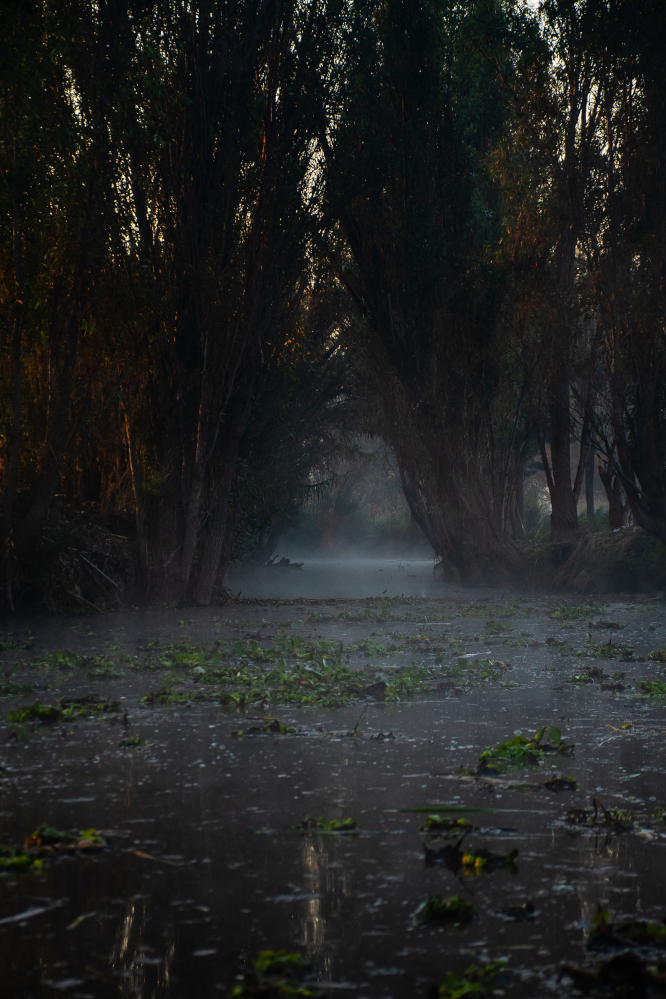
This was the earliest shot I felt I could post. I would have loved to shoot the canals in the predawn gloaming, but that isn’t something that shooting without a tripod from a kayak is going to get you good results in.
.
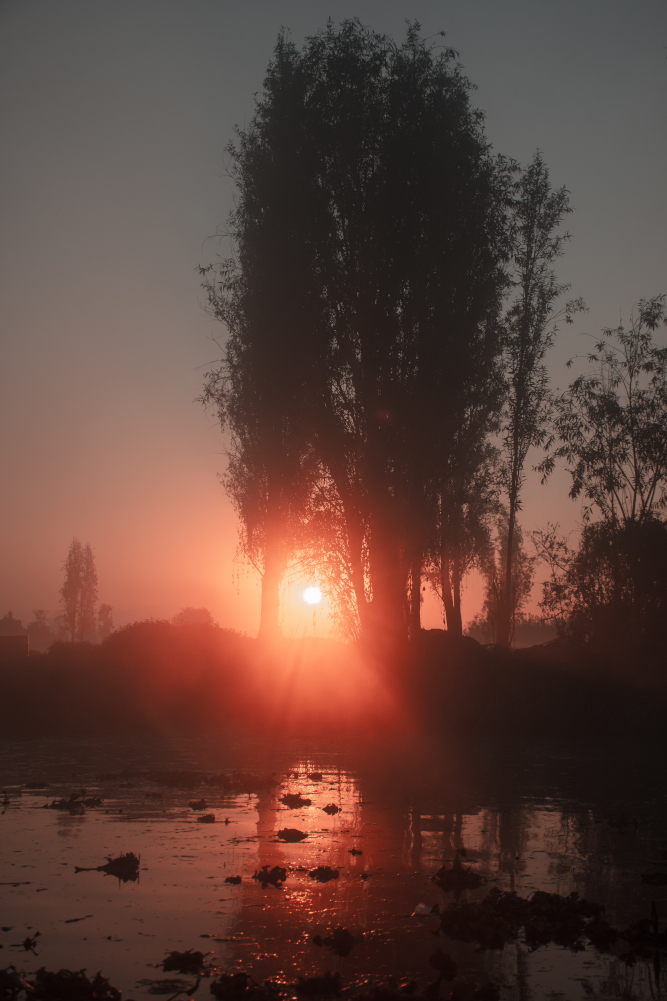
To greet the sunrise, our guide took our small group of four people out to a slightly bigger lagoon where we could watch the sun coming up over the distant mountains.
.
.
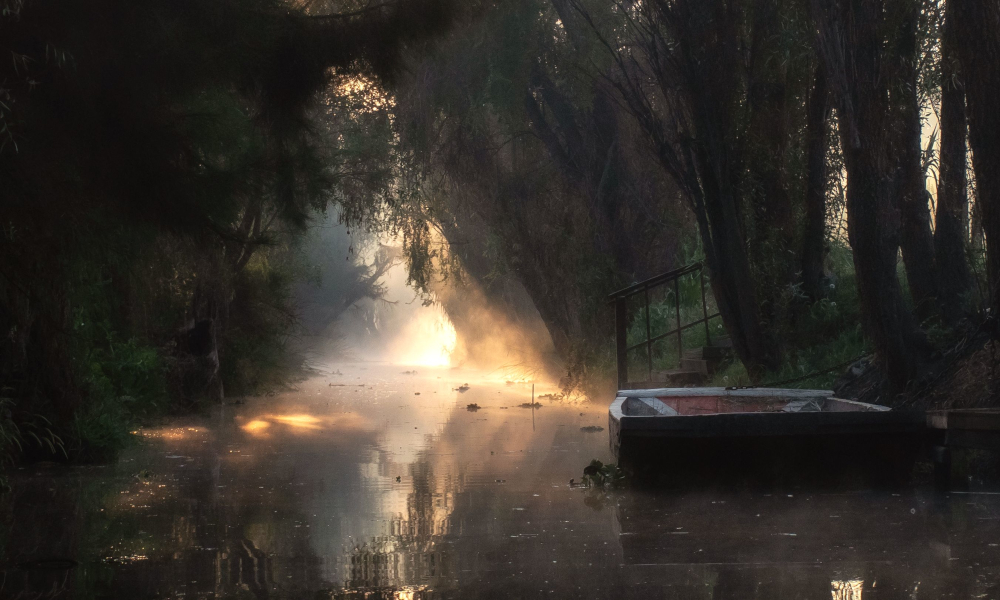
Seen above is a trajinera likely used by a local for transport rather than as a party barge.
.
After this, we would go have breakfast on one of the chinampas, then onto the place that initially drew me to Xochimilco. Coming up in the next post: la Isla de las Muñecas.

